🌸 Holi in Nepal: sacred spring ritual and renewal

🌞 What is Holi in Nepal?

In Nepal, Holi is called Fagu Poornima. This festival takes place during the full moon, in the Hindu calendar month Phagun, that is between early March and early April.

It marks the end of the long winter months. The return of the sun and higher temperatures corresponds to this moment of celebration.

Thus, Holi celebrates the growing light and the renewal of nature.

🔥 The fire ceremony: celebrating the light

First of all, a fire ceremony takes place on the night preceding the celebrations.

In each village, a large pile of wood is built. Each household brings logs to form a collective fire.

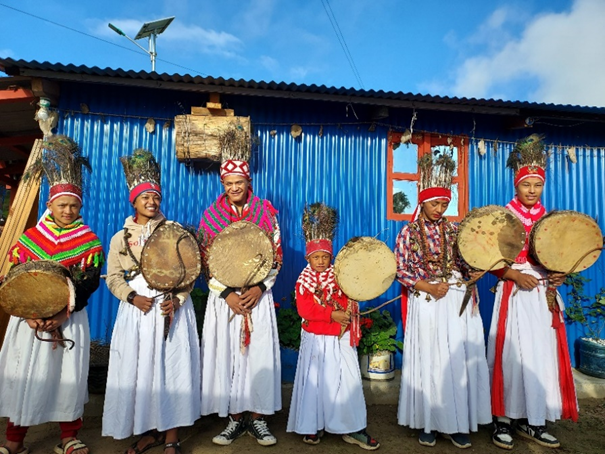
The oldest person in the village, or the one who leads the ceremony, lights the fire. This can be a dhami – jhankri, a Nepalese shaman.

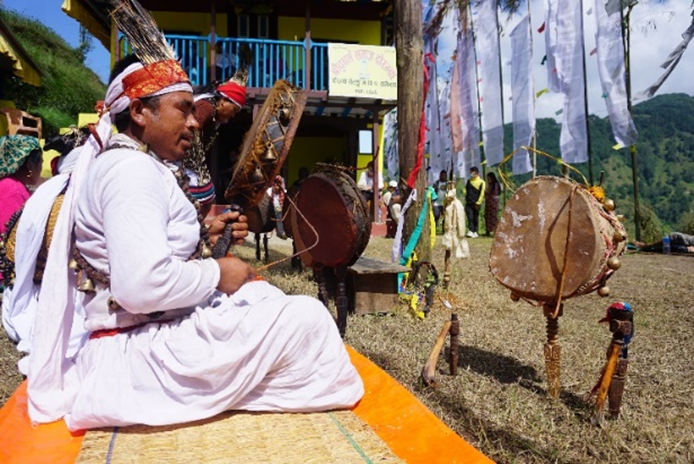
Around the flames, the community gathers. Participants play traditional music with drums and trumpets. Then, voices rise and accompany the dances around the fire.

This moment allows to:

  • let go of darkness and cold
  • bring healing energies
  • strengthen bonds within the community

🏵️ The sacred pole ritual in Kathmandu

In Kathmandu, the festival begins with the raising of a ceremonial pole called chir. This pole is made from a pine tree cut in the district of Bhaktapur. It is then transported in ceremony to Kathmandu. It is erected in Basantapur, on Durbar Square.

The top of the pole is surrounded by strips of colored fabric. At its base, oil lamps are lit and placed on a ground covered with cow dung.

Participants also tie colored threads around the trunk.

This pole symbolizes both the union of masculine and feminine energies and a banner of victory to welcome spring.

The fabrics represent the garments of the Gopinis (devotees of Krishna).
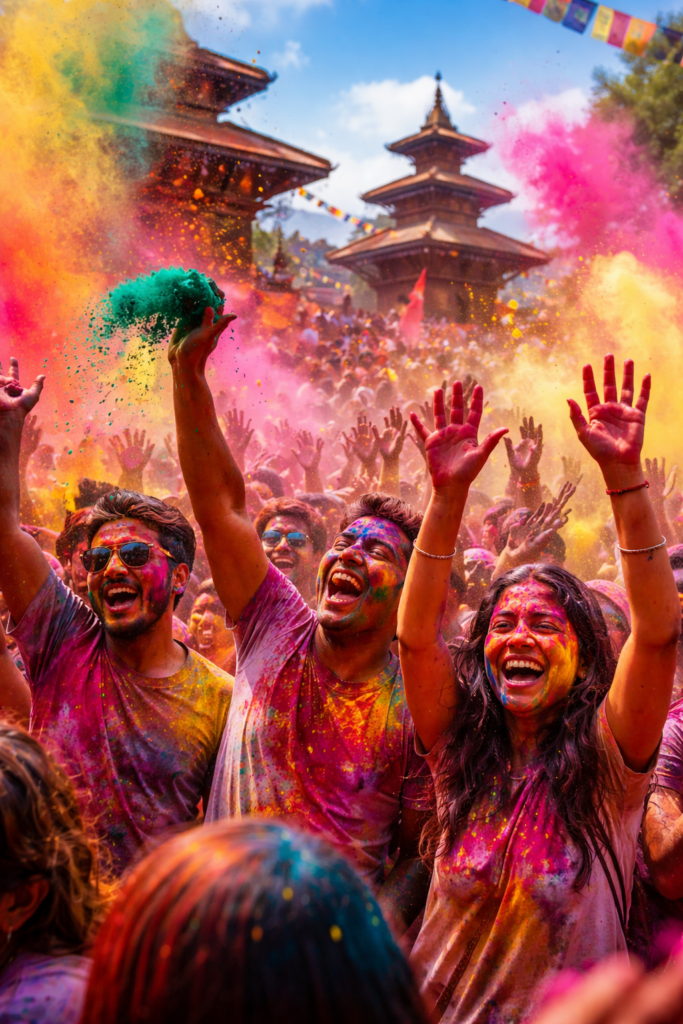
Festival of colors during Holi celebrations in Nepal

🌈 The day of colors: celebrating life

The next day, the festival becomes joyful and colorful. It celebrates the defeat of darkness by the forces of light.

It also symbolizes the union of Earth, Dharti Mata, and Sky, Akash. This union marks the season of fertility of nature.

To celebrate this moment, participants throw colored powders at each other. They move in small groups and cover themselves with colors.

🔥 The final of the festival: fire and protection

At the end of the festival, the pole is lowered.

The crowd rushes to collect the strips of fabric. They are considered protective amulets against evil spirits.

Then, the pole is transported to Tundikhel, a large square in Kathmandu. It is burned in a large fire, into which women throw coconuts.

Finally, participants bring home embers and ashes to purify their house.

📜 What is the origin of Holi in Nepal?

Holi was originally a festival celebrating spring, good harvests and fertility.

The first mentions date back to the 4th century. It is also described in a 7th-century Sanskrit play titled Ratnavali, written by Harsha.

Today, Holi is mainly associated with several legends of Hindu mythology.

The first legend is that of Holika and Prahlada, children of Hiranyakasyapu.

Hiranyakasyapu considered himself the most powerful being in the universe and wanted everyone to worship only him. Prahlada, on the other hand, was a devotee of the god Vishnu.

Hiranyakasyapu tried many times to convince his son to worship him, but failed miserably. Prahlada therefore continued to worship the god Vishnu. He tried to kill him several times, without success.

Hiranyakasyapu then plotted to assassinate his 5-year-old son. He ordered Holika, his sister, to kill Prahlada. Holika was supposed to be protected from fire thanks to a fireproof robe. And finally, she took Prahlada into the flames.

However, because of his faithful devotion to the god Vishnu, the god Krishna came to his rescue: the prince came out unharmed, while Holika burned in his place.

Holika Dahan, which means “the end of Holika”, is today known as Holi. People still celebrate the death of Holika with colors. They make a straw replica of Holika and burn it during the Holi festival.

💕 The story of Krishna and Radha

It is said that Krishna constantly complained to his mother, Yasodha, and that all his friends teased him by calling him “the dark one” (Kala).

It is said that he asked Yasodha why he was dark while all his friends (the Gopinis, including his beloved Radha) had fair skin.

Yasodha then gave Krishna different colors and asked him to throw them on the faces of all the Gopinis so that they too would have dark skin like him.

Krishna brought the colors and applied them to all the Gopinis. The Gopinis loved these colors, as they were all deeply in love with Krishna and enjoyed this moment.

This is one of the legends explaining the use of colors during Holi festivities.

Today, colors symbolize:

  • blue for Krishna
  • red for love and fertility
  • green for spring and renewal
  • yellow for turmeric and prosperity

🌿 Create your own renewal ceremony

This ceremony can be performed at the beginning of spring or at any time when you wish to mark the end of one cycle and the beginning of another.

It can celebrate:

  • the end of an important project
  • a new relationship
  • a birth
  • a return to health

It is about honoring these events and the renewal that accompanies them.

You can choose to celebrate this passage alone or with your loved ones.

🌍 In conclusion, Holi in Nepal…

Holi is the most colorful festival in Nepal, and very probably on the continent.

It celebrates renewal, light and the cycles of life. Through fire, colors and rituals, it marks the passage toward a new beginning.


❓ FAQ / Frequently Asked Questions – Holi in Nepal

When does Holi take place in Nepal?
Holi takes place during the full moon, in the Hindu calendar month Phagun, between early March and early April.

What does Holi symbolize?
Holi symbolizes the return of light, fertility and renewal.

Why is a fire lit?
The fire commemorates the death of Holika and symbolizes purification.

Why are colors used?
Colors celebrate fertility, joy and the legend of Krishna and Radha.
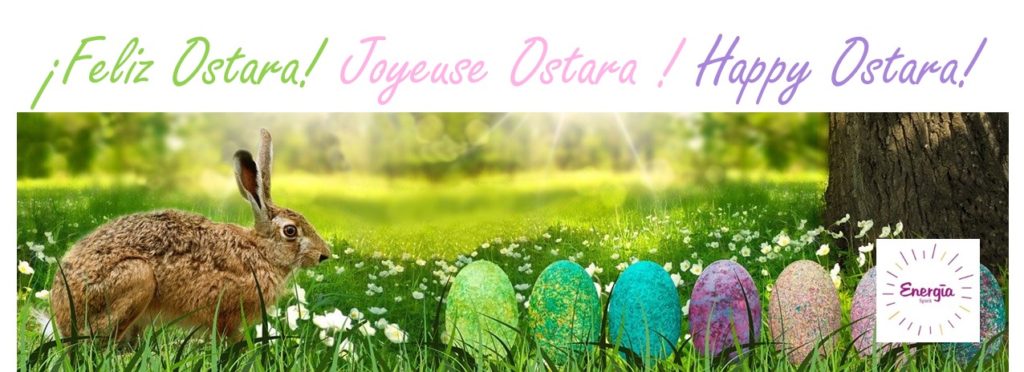
Ostara / Eostre: The Arrival of Spring in the Celtic Calendar

Around March 20, in the Northern Hemisphere, we celebrate the return of spring. It is a moment that marks the balance between day and night, the equinox. It is also the return of light and the return of the earth’s fertility, with the first shoots beginning to emerge from the ground, buds timidly appearing on the branches of shrubs and trees, chicks leaving their nests, and hares leaping into the grass to court one another. Light triumphs over darkness. The days are sweeter, longer, and livelier. Energy and passion are two other symbols of this period. The two polarities—feminine (moon-night) and masculine (sun-day)—balance each other and unite to make life fruitful.

ostara

After a harsh winter, the rebirth of life and the Earth is associated with the Anglo-Saxon goddess of fertility: Eostre, often linked to the goddesses of the Dawn—Aurora for the Romans and Eos for the Greeks. These goddesses were thus entrusted with the task of ushering in the morning, letting in the light of day. As a symbol of Dawn and Aurora, the associated direction is, in fact, the East.

The Spring Equinox is also associated with the Germanic goddess Ostara, whose name derives from the word “ost,” meaning “East.” Ostara is the goddess of fertility, the earth, nature, and youth.

The animals associated with this period of fertility are chicks, young rabbits, ducklings, and young animals. The rabbit or hare, formerly associated with the moon, is also a symbol of fertility.

The colors associated with Ostara are the yellow of the sun and the green of nature.

Rituals tailored for these days of renewal

  • Spring cleaning began with Imbolc in early February. Now is the time to finish that big house cleaning—in every area of your life and on every level—by sweeping away stagnant and even harmful energies. So grab your broom and sweep away, both symbolically and physically, whatever you no longer need from inside your house or apartment. Sweep each room with the broom, starting from the corners opposite the door, to sweep them toward the room’s doorway, and then sweep them out through the front door with gratitude. Next, you can burn incense (Copal, Benzoin…) or smudge with white sage, rosemary, etc., in each room, and then air them out. And don’t forget to pass the sage or incense around yourself as well to free yourself too.
  • The celebration of life and fertility comes to life with eggs that you can paint in vibrant colors. Once used in sacred rituals before being eaten, eggs represent the genesis of the world, where life emerges from darkness to discover the light.
  • To celebrate the Earth’s awakening in the coming days, you can also take a walk in nature, barefoot, gather the first fresh flowers of the year, and express your gratitude for their blooming, their blossoming. Observe the buds emerging, listen to the buzzing of insects. You can also tend to your garden, plant seeds, or simply enjoy the warmth of the sun. In any case, take this moment to ground yourself, and take a long, deep breath to welcome this renewal.
  • Ostara is also an ideal time to spark new projects, to create, to initiate change. So take your best pen and draw your desires, affirm your desires, decree your desires. Do this by including as many details as possible: date, place, images, sound, sensation, surroundings…
  • Take a moment to meditate while sitting or lying under a tree and enjoy the present moment, observing your surroundings, smiling at life.

#ostara #eostre #ancestraltradition #rebirth #growth #life #fertility #nature #equinox #spring

RESIDENTIAL NEPALESE HIMALAYAN SHAMANISM RETREAT – The Dhami-Jhankri Shamanic Path

Madrid – Spain – From June 25th to 28th 2026

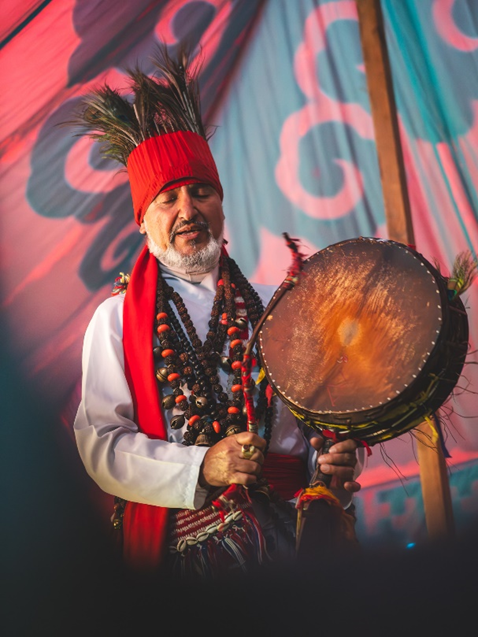
Introducing Nepal Himalayan Dhami-Jhankri-Shamanism with Nepalese Jhankri Shaman Bhola Banstola.

Photo: Céline Godeux ©

What will you learn during the “Dhami-Jhankri Shamanic Path” retreat?

Embark on a transformative journey with Bhola Banstola, a distinguished lineage carrier of the Nepali Dhami-Jhankri Shamanic Path. This is your unique chance to immerse yourself in an ancient practice, steeped in wisdom that has been lovingly passed down through generations. Whether you are a curious beginner or an experienced practitioner, these teachings will offer you invaluable insights and guidance.

Delve into the heart of traditional Shamanism, where the rhythmic pulse of drumming and the melodic resonance of sacred mantras guide you on active narrative journeys, opening doors to profound states of awareness.

This practice is a celebration of the power of sacred songs, utterly devoid of any mind-altering substances. Shamanism stands as humanity’s oldest spiritual healing tradition, empowering us to reconcile our past, enrich our present, and illuminate our future.

The gifted Dhami-Jhankri Shamans have long harnessed their abilities to heal emotional wounds, dissolve anxiety, and nurture community resilience. During this transformative experience, participants will explore various levels of Transmission, tapping into the boundless healing energy that lies within.

You will uncover practical methods to foster self-empowerment and support others, all through the dynamic mediums of rituals, dances, chants, and drumming. Rooted in ancestral wisdom, lineage, and a deep connection to nature, Shamanism invites us to engage with local spirits, emphasizing the importance of seasonal rituals as pathways to protection and harmony. Commitment and understanding are essential to deepening our practices.

We invite you to become part of “Transmission of Laying the Foundation”, a pivotal first step into the profound exploration of this sacred tradition.

Here’s what awaits you:

  • Discover the rich roles of the Dhami-Jhankri-Shaman, both in history and contemporary contexts.
  • Create a sacred shamanic space (Thaan) and prepare traditional ritual offerings (Chadaunu) imbued with intention and respect.
  • Embark on an exploration of elemental spirits and our intimate relationship with them through guided Transmission.
  • Experience the exhilaration of active trance states through drumming and chanting, fostering deep connections without the use of mind-altering substances.
  • Co-create a healing Mandal-Rekhi that serves as a vibrant portal for wellness and transformation.
  • Gain insights into disharmony and actively engage in a collective healing ritual that nurtures the group.
  • Participate in the empowerment of Bhumi-Devi (Mother Earth), reinforcing our bond with the planet.
  • Learn the sacred art of creating Thaan (altars) that honor the spirits of nature and ancestors.
  • Connect deeply with Kul (lineage protectors), Pitri (ancestors), and Ista Deo (guiding spirits), anchoring your spiritual journey.
  • Access personal protection, healing, and empowerment that resonates with your unique essence.
  • Conclude with the profound ritual of Siir Uthaune (raising the spirit), embracing the fullness of your experience.

Join us on this extraordinary odyssey into the rich tapestry of Nepali-Himalayan Dhami-Jhankri shamanic wisdom, and unlock the limitless possibilities that await you in healing and learning.

Your journey begins here.

Photo: Céline Godeux ©

Who is leading the retreat?

Learn Nepali shamanism directly from an established, authentic lineage that has been passed down for millennia, remaining a living tradition uninterrupted. Bhola Banstola, a 27th Generational Shaman, has been teaching internationally for decades. He has established himself as one of the rare teachers of traditional Shamanism, inspiring people from all cultures by teaching them the practices his family lineage has used successfully for many thousands of years. He is offering his instruction and wisdom through Zoom, with live sessions, but also through retreats in different countries of Europe and pilgrimages in Nepal.

Photo: Bastien Laure ©

More info about Bhola:

www.BholaBanstola.com
www.nepalishamanism.com

Is it right for you?

This course is designed for individuals who are willing to experience and learn firsthand the traditional shamanic path and then adapt those methods and practices to their own unique circumstances, culture, and environment. By participating in this course, you will not only gain a deep understanding of Nepalese Shamanism but also experience personal and spiritual growth. This course will be done through a 4-day immersion teaching, with 3 nights and shared meals.

Are there any previous requirements to access the retreat?

No specific requirement is asked. Nonetheless, as a suggestion, you can start your journey with the books written by Bhola (More information: https://bholabanstola.com/books/)

 “Working with the Elemental Spirits – The Five Elements and Shamanism in Nepal”

“The Nepalese Shamanic Path – An experiential guide to the shamanic spiritual practices of the Himalayas shared by a 27th-generation Nepalese shaman”

What is included in the retreat?

In the price of the retreat, are included:

  • Bhola’s teachings from Thursday to Sunday
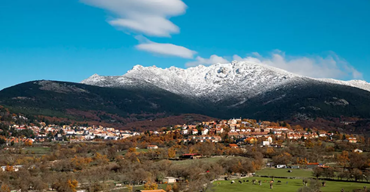
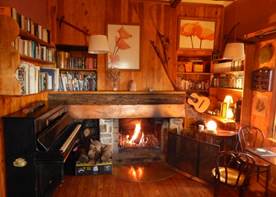
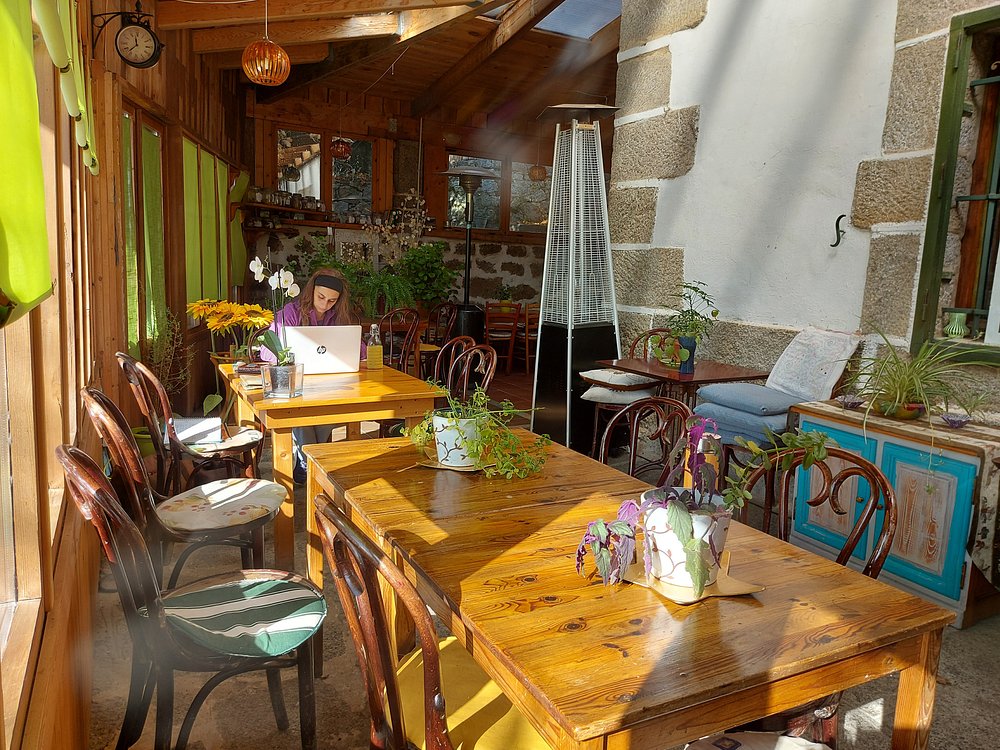
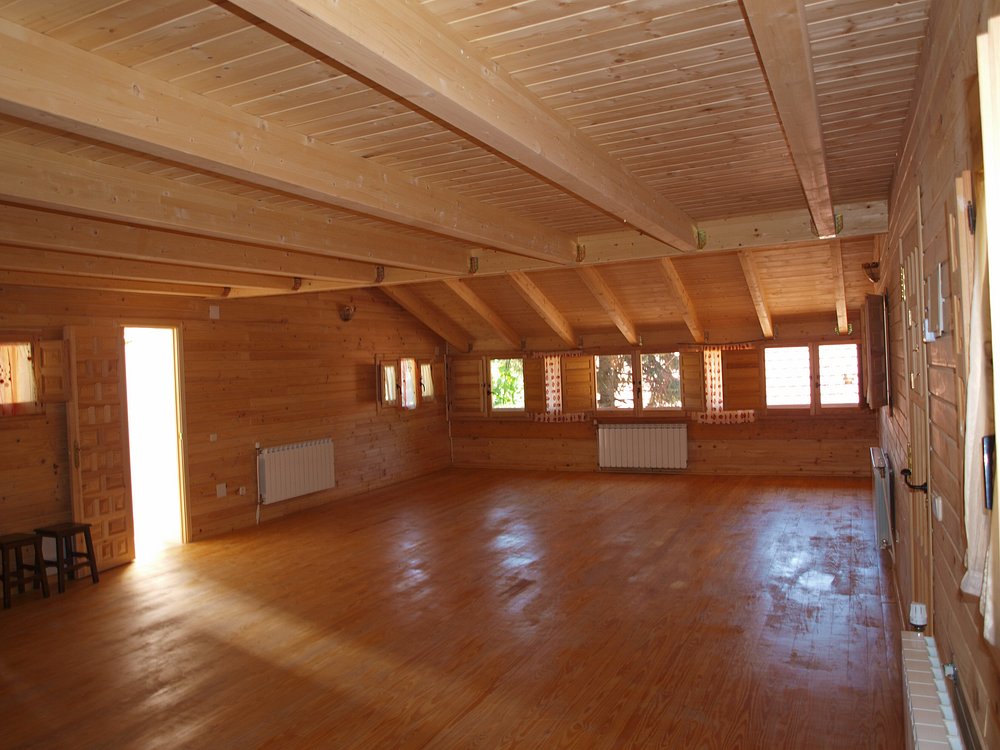
  • Accommodation: 3 nights in shared rooms (there is no individual room available) in simple accommodation, cabins, typical mountain rooms, in a wooded setting on a 17,000 m² estate, open to nature and the mountains (Cercedilla is located at an altitude of 1,118 m).
  • Vegetarian meals from Thursday dinner to Sunday lunch. If you have any food allergies or require a special menu due to medical reasons, please consult us to see if there will be any additional charges.
  • Tea breaks

What is NOT included in the retreat?

Are not included in the retreat price:

  • Transfer from Madrid City to Cercedilla (around 3€/trip by bus or 5,50€/trip by commuter train)
  • Towels or personal hygiene products
  • Work materials (writing): each person may bring their own notepad and pens if they wish to take notes (not compulsory).

Teachings will start on Thursday, June 25th at 4pm and will finish on Sunday June 28th at 4pm.

You are welcomed on site (Cercedilla, mountain village of the Sierra de Guadarrama) on June 25th from 3pm and you will leave the site no later than Sunday June 28th at 4:30pm.

To get to the site in Cercedilla, around 50km from Madrid, you can come by:

  • bus (autobus interurbano) from Madrid – Moncloa bus station: bus 684, up to C/ Emilio Serrano in Cercedilla (around 50 min. to 1h from Moncloa Station)
  • Commuter train (tren de Cercanias) from many stations like Chamartin, Nuevos Ministerios, Recoletos, Atocha: line C8 (around 75 minutes from Chamartin station)
  • Car (you will not be able to park on site, but you can search for a parking place near the train station) or taxi / Uber (around 50min to 1h depending on traffic and where you come from within Madrid city)

Recommendation: use Citymapper app or similar to get detailed information on public transportation.

A WhatsApp group will be created for participants to follow up on logistics (like car sharing), teachings and sharing.

How to register and contribute financially?

You can register sending an email to energiaspirit[@]gmail.com.

The full retreat has a humble contribution of 555 euros (VAT included) for all teachings, meals and 3 nights (transfer and remittance at your own expense). We ask for a deposit of 295 euros to secure your place (non-refundable). Additional donations are welcome.

For further details or any other questions, please get in touch with Céline via email energiaspirit[@]gmail.com.


We look forward to welcoming you to these Dhami-Jhankri teachings, with their deep roots in the Nepalese Himalayas and practiced for millennia. It’s Nepal’s living culture and heritage.

Namaste